Share MRI on Whatsapp

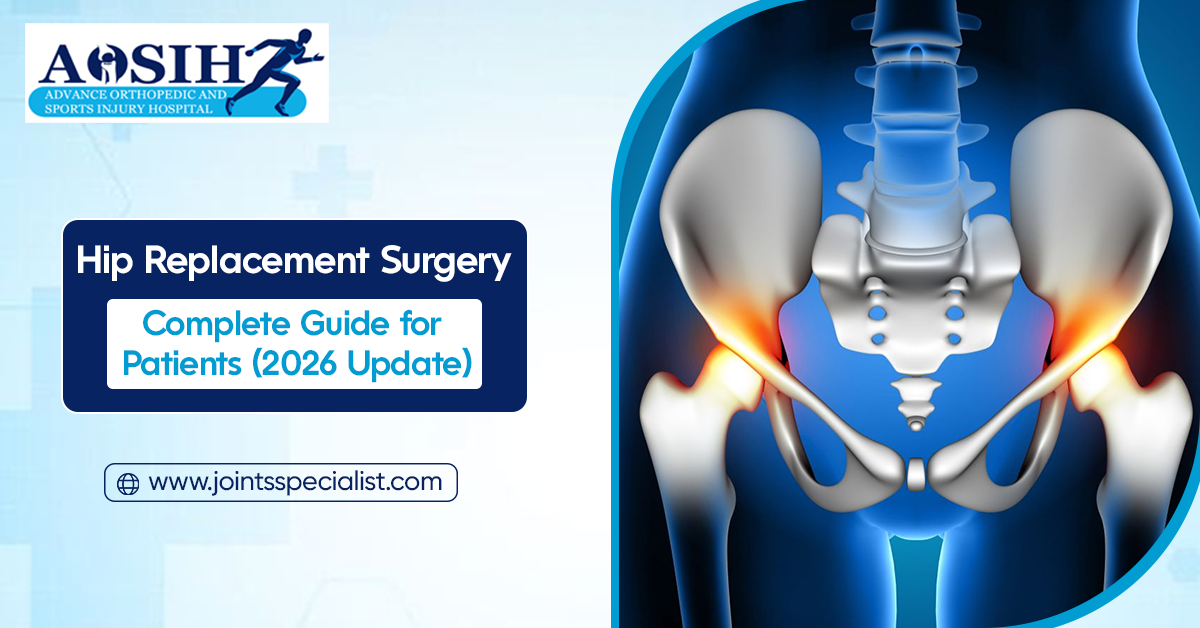
Hip Replacement Surgery – Complete Guide for Patients (2026 Update)
If your hip has been hurting for months and you are finally searching for information on hip replacement surgery at midnight, you are not alone. Lots of people get to this point every year. They are tired of taking pain medication, tired of limping, and tired of missing out on the things they love to do. This guide will tell you everything you need to know about hip replacement surgery in 2026, from the symptoms to full recovery, so you can make a decision that is right for you without getting confused by medical terms.
What Is Hip Replacement Surgery?
Hip replacement surgery is a surgical process that involves the extraction of damaged sections of the hip joint and the substitution with parts constructed from different materials including metals and plastic is referred to as hip replacement surgery. The procedure aims at restoring the normal functions of the hip joint without causing pain.
Hip replacement surgery involves inserting different parts into the hip joint to restore its normal function.
Over time, the methods adopted for performing hip replacement surgery have undergone drastic changes. Nowadays, the procedures involve the adoption of sophisticated machines to perform the surgery; patients stay in the hospital for a week; however, most of the time, patients are discharged from hospitals even within a couple of days.
Who Actually Needs A Hip Replacement?
Not every pain in your hip means you need to have surgery. Doctors usually say you need a hip replacement when:
- Pain does not go away even after you take medicine, do physical therapy, and make changes to your lifestyle.
- You have trouble doing everyday things like climbing stairs, putting on your shoes, or getting out of a car.
- X-rays show that your joint is badly damaged, usually because of osteoarthritis, rheumatoid arthritis, or avascular necrosis.
- Hip pain keeps you awake at night regularly.
- You had a hip fracture in the past that did not heal well.
A hip replacement used to be something that older people got, but that is not the case anymore.
Why Hip Pain In Young Adults Is Becoming Common
Something that surprises a lot of people is that hip pain in young adults is now one of the reasons why people go see an orthopedic doctor. Hip pain is not a problem for older people anymore. There are reasons why this is happening:
- People sit around a lot. Then exercise really hard. Many young people sit at their desks for more than eight hours a day and then work out really hard on the weekends, which is not good for their hip joints.
- Avascular necrosis is a condition where the blood supply to the hip bone is cut off. It is happening more often in people who are in their 30s and 40s sometimes because they use steroids, drink too much alcohol, or have autoimmune diseases.
- Sports injuries and labral tears. Athletes and people who like to work out often hurt their hips. If they do not take care of it, the problem gets worse over time.
- Some people are born with hip problems. Get them when they are young. Things like hip dysplasia can cause joints to get worse faster.
If you are under 45 and have hip or groin pain that will not go away, do not think it is a strain. If you find out what is wrong early, you can prevent the kind of damage that might mean you need to have hip replacement surgery.
Signs You Shouldn’t Ignore
- A dull ache in the groin that spreads to the thigh or buttock
- Stiffness after sitting for long periods
- A clicking or catching sensation in the hip
- Reduced range of motion when tying shoelaces or crossing your legs
- Pain that worsens with walking or standing
If these symptoms last more than a few weeks, it’s worth getting an X-ray or MRI rather than waiting it out.
How to Choose the Right Orthopedic Surgeon in Jaipur
Jaipur is a place for people who need help with their bones and joints. There are good hospitals in Jaipur that can do very complicated surgeries. It is very important to choose the right doctor.
Here are some things to look for when you are trying to find an Orthopedic Surgeon:
- The doctor should have done joint replacement surgeries. Ask the doctor how many hip replacement surgeries they do every year.
- The doctor should have the equipment and techniques. Ask the doctor if they use machines to help them do the surgery.
- The doctor should be able to explain things to you in a way that you can understand. A good doctor will tell you what is wrong with you, what they can do to help you, and what might happen after the surgery.
- The hospital should have a team of people to help you get better after the surgery. This is very important because getting better does not stop when you leave the operating room.
- You should read what other people say about the doctor. Do not just look at the stars; read what people say about their experience with the doctor.
A good Orthopedic Surgeon in Jaipur will talk to you about options before they do surgery. Surgery should be a resort, not the first thing they try. For example, an orthopedic surgeon in Jaipur like Dr. Naveen Sharma is very good at talking to patients. Explaining things to them. He has done joint replacement surgeries, and he is very honest with his patients. He will tell you what you need to do to get it, and he will not rush you into having surgery. An Orthopedic Surgeon should always put the patient first.
What Happens Before Surgery
Before you have your operation, you will usually have to do things. These things include:
- A physical examination to check your body
- You will have X-rays or MRI scans.
- You will have blood tests and checks on your heart if you need them.
- You will talk about the options for anesthesia.
- You will do exercises to make the muscles around the area stronger.
- You will get advice on how to get your home ready for when you come back from the hospital. This means things like getting a seat for the toilet and rails for the shower. You should also make sure you do not trip over anything.
- You should tell your surgeon everything about your health, the medicines you take, and the things you do every day. This really helps make sure everything goes well.
What Happens During Surgery
Most hip replacement operations take one to two hours. The surgeon will take out the damaged part of your hip and the old cartilage. Then they will put in the prosthetic parts. The surgeon will choose the way to do the operation based on your body and what you want to be able to do after the operation.
Recovery Timeline: What to Realistically Expect
- Day one and two: You will be walking with a walker. You might even do this on the day of your operation.
- Week one and two: You will leave the hospital. You will be able to move around a bit with some help.
- Weeks three to six: You will use your walker or cane less and less. You will also have physical therapy sessions to help you get stronger.
- Week six to twelve: Most people can go back to work at a desk job. Do light things every day.
- Three to six months: You will be able to do things you used to do, including driving and sports that are not too rough.
- Six to twelve months: Your hip will be strong. You will feel confident. The new joint will have fully settled into place.
The speed at which you recover depends on how old you are, how fit you are, and how well you follow the instructions for your rehabilitation.
Risks and How They’re Managed Today
Hip replacement surgery is an operation, and it has some risks. These risks include getting an infection, blood clots, or problems with the joint. However, the way surgeons do operations now is better than it was ten years ago. The doctors have methods to prevent infection and can give you medicine to prevent blood clots. They can also make sure the new joint is the right size for you. All these things mean that there are problems after the operation. Hip replacement surgery is a deal, but it can really help people who have bad hips. You should talk to your surgeon about hip replacement and what it can do for you.
Final Thoughts
Hip pain does not have to be something that you just deal with for years. If you are an adult with hip pain from wear and tear or a younger person who is quietly struggling with hip pain that doctors are not taking seriously, it is worth getting a proper checkup. You should talk to an Orthopedic Surgeon in Jaipur, ask them the tough questions, and make a decision that helps you get back to living your life. Not just getting by.
If you live in or around Jaipur and you are looking for a specialist to help you make a decision, you can start by talking to an experienced surgeon like Dr. Naveen Sharma. This can be a first step towards getting a clear and personalized plan to diagnose and treat your hip pain.
Frequently Asked Questions
1. Is hip replacement surgery painful?
You will feel some discomfort when you are recovering. The doctors have ways to manage the pain. Most people say that the pain is much less than what they felt before they had the surgery.
2. How long does a hip implant last?
The new implants can last for 20 to 25 years. Sometimes even longer. It depends on how active you’re what the implant is made of.
3. Can young adults get hip replacement surgery?
Yes, they can. If a young adult has hip pain because of a condition like necrosis or severe joint damage, the doctor may recommend surgery even if they are in their 30s or 40s. This is especially true if the hip pain is really affecting their quality of life.
4. Is minimal surgery available in Jaipur?
Yes, many hospitals in Jaipur now offer invasive and computer-assisted hip replacement techniques. So it is worth asking your Orthopedic Surgeon about these options.
5. What’s the success rate concerning hip replacement surgery?
The typical success rate is generally above 95%. Most patients report that their pain has improved significantly and their mobility has increased over the next few months. Hip replacement surgery is considered an appropriate treatment option for patients who wish to reduce their hip pain and restore their functionality. For additional information about hip replacement surgery and its advantages, please consult your local orthopedic surgeon in Jaipur.