What Is ACL Surgery?
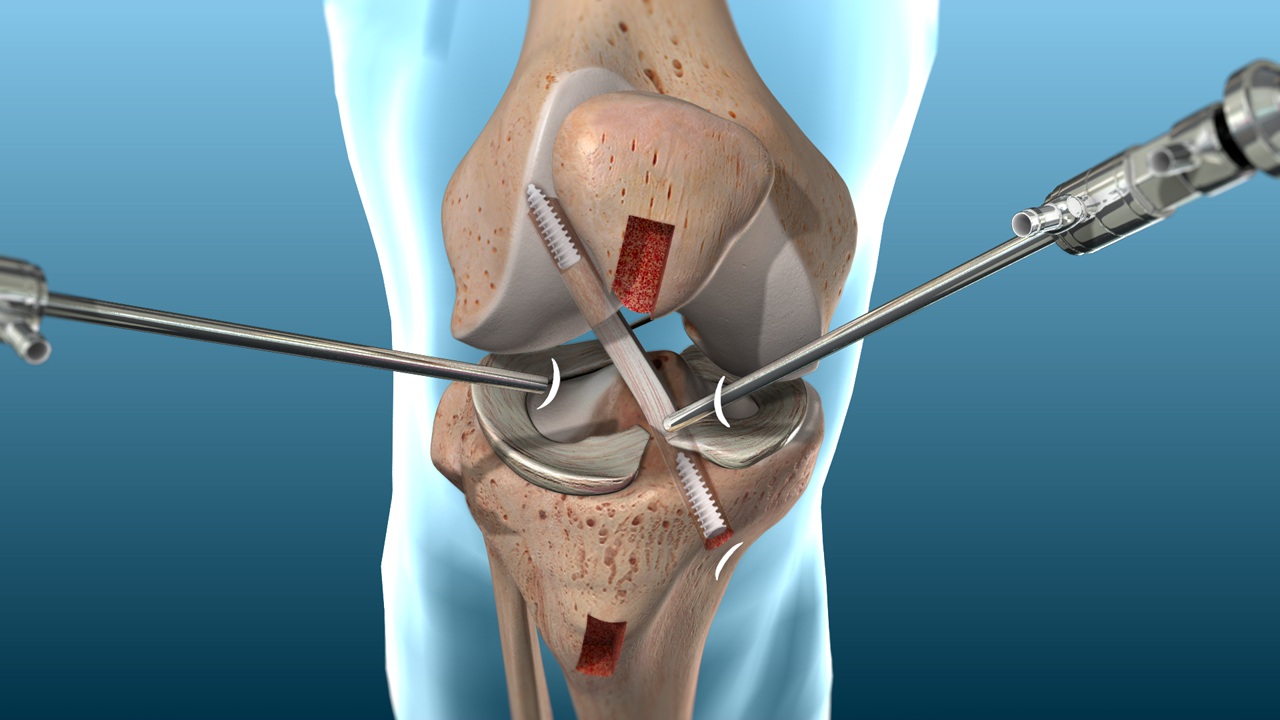
Quick answer ACL surgery, also called ACL reconstruction, replaces a torn anterior cruciate ligament with a tendon graft using keyhole (arthroscopic) instruments. It restores knee stability so the knee stops "giving way" and protects the meniscus and cartilage from further damage. The surgery takes about 60–90 minutes and most people return to sport in 6–9 months.
The anterior cruciate ligament (ACL) is one of the four main ligaments of the knee. It connects the thigh bone (femur) to the shin bone (tibia), stops the shin bone from sliding forward and controls twisting movements. When it tears, the knee loses this control and feels loose or unstable.
Because the ACL has a poor blood supply, a complete tear does not heal back on its own. For active people in Chennai who play football, cricket, badminton or kabaddi, or simply want a knee they can trust, arthroscopic ACL reconstruction is the most reliable treatment. It helps you:
- Walk, climb stairs and turn without the knee buckling
- Reduce pain and recurring swelling
- Prevent meniscus tears and early knee arthritis
- Return safely to sports, gym and fitness
- Regain strength, balance and confidence in the knee
ACL Surgery at a Glance
| Procedure | Arthroscopic (keyhole) ACL reconstruction |
|---|---|
| Surgery time | 60–90 minutes |
| Anaesthesia | Spinal or general, with a nerve block for pain control |
| Hospital stay | 1–2 days |
| Walking | With support from day 1; independently in 2–3 weeks |
| Back to desk work | 2–3 weeks |
| Return to sport | 6–9 months, after strength & balance tests |
| Success rate | Around 90% of patients regain a stable knee |
How Does an ACL Tear Happen?
Most ACL injuries are non-contact sports injuries – the foot stays planted while the body twists or changes direction. That is why ACL tears are common among footballers, cricketers, kabaddi and badminton players, and gym-goers in Chennai. The common causes are:
- Sudden change of direction – cutting or pivoting while running.
- Awkward landing – landing from a jump with the knee bent inward.
- Stopping suddenly – decelerating hard while sprinting.
- Direct blow to the knee – a tackle, collision or road traffic accident.
- Slips and falls – twisting the knee on stairs, wet floors or uneven ground.
Women athletes, people with weak thigh and hip muscles, and those returning to sport without proper conditioning have a higher risk of an ACL tear. Learn more about ACL tear symptoms and causes.
Signs That Indicate the Need for ACL Tear Treatment
An ACL injury is not always dramatic at first. Many people walk off the field and only realise something is wrong when the knee swells or shifts days later. Watch for these ACL tear symptoms:
-
 A sudden "pop" A sharp snap felt or heard at the moment of injury.
-
 The "giving way" feeling The knee won't support your weight while walking or turning.
-
 Not able to move freely Difficulty fully bending or straightening the knee.
-
 Sports feel difficult Running, jumping and playing no longer feel safe.
-
 Swelling that shows up early The knee swells within a few hours and feels tight or heavy.
-
 Pain during normal movement Standing, squatting and changing direction start to hurt.
-
 Unstable during quick turns Fast pivots feel risky, as if the knee may shift.
-
 Still not better with rest The knee stays weak despite rest, a brace or physiotherapy.
If you notice two or more of these signs after a knee injury, consult a sports injury and ACL specialist early. Early ACL tear treatment prevents further damage to the meniscus and cartilage.
Does Every ACL Tear Need Surgery?
No. The right ACL tear treatment depends on how badly the ligament is torn, your age, your activity level and whether other parts of the knee are injured.
Non-surgical ACL treatment may work for:
- Partial (Grade 1–2) ACL tears where the knee still feels stable
- Less active people who don't play pivoting or contact sports
- Older patients willing to modify activities
This includes physiotherapy, quadriceps and hamstring strengthening, balance training and a knee brace for 6–12 weeks.
ACL reconstruction is usually advised when:
| Your situation | Usually recommended |
|---|---|
| Complete (Grade 3) tear in a young or sporty person | Arthroscopic ACL reconstruction |
| Knee keeps giving way in daily life | ACL reconstruction to protect meniscus & cartilage |
| ACL + meniscus tear | ACL reconstruction with meniscus repair in the same surgery |
| ACL + PCL / multi-ligament injury | Single-stage multi-ligament reconstruction |
| Failed earlier ACL surgery | Revision ACL reconstruction |
How Is an ACL Tear Diagnosed?
A correct diagnosis decides whether you need ACL surgery or can recover with physiotherapy. It usually involves:
- Clinical examination
The surgeon checks knee stability with the Lachman, anterior drawer and pivot-shift tests, which show how much the shin bone moves forward.
- MRI scan of the knee
Confirms a partial or complete ACL tear and shows any meniscus tear, cartilage damage or bone bruise.
- X-ray (if needed)
Rules out fractures and checks bone alignment before ACL surgery is planned.
Already have an MRI report?
Send it on WhatsApp from Chennai and get a doctor's opinion – no travel needed.
How Is ACL Reconstruction Performed?
When the ligament is fully torn and the knee feels unstable, arthroscopic ACL reconstruction restores strength so movement feels natural again. It is done through 2–3 small keyhole cuts under spinal or general anaesthesia, and you usually stay in hospital for 1–2 days. The steps are:
-
Arthroscopic assessment
A high-definition camera is placed inside the knee to confirm the ACL tear and check the condition of the meniscus and cartilage.
-
Graft harvesting & preparation
A strong tendon – most often the hamstring or peroneus longus – is taken through a small cut and prepared to the right length and thickness.
-
Tunnel drilling & graft placement
Precise tunnels are made in the thigh and shin bones at the ligament's natural attachment points, and the new graft is passed through them.
-
Fixation & final stability check
The graft is secured with buttons or screws, and the knee is tested through its full range for stability before the cuts are closed.
Advanced Technology Used in ACL Surgery
Modern ACL surgery uses advanced tools that help the surgeon see the injury clearly, place the ligament accurately and make sure the knee feels stable after recovery:
- HD arthroscopy camera for a clear view inside the knee
- Anatomic tunnel-guidance instruments for accurate graft position
- Adjustable-loop buttons & bio-screws or strong fixation
- All-inside techniques to reduce pain and scarring
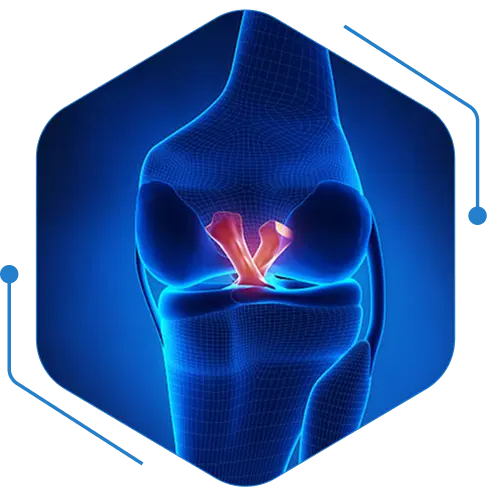
Types of ACL Grafts – Which Is Right for You?
The graft is the tissue that becomes your new ACL. The choice depends on your sport, body type, knee condition and whether it is a first or revision surgery.
| Graft type | Best suited for | Key advantage | Consideration |
|---|---|---|---|
| Hamstring tendon | Most adults & recreational athletes | Small cut, less front-knee pain | Hamstring strengthening needed in rehab |
| Peroneus longus | Athletes wanting to spare knee muscles | Thick graft, knee muscles stay intact | Taken from the outer ankle area |
| Bone-patellar tendon-bone | High-demand pivoting sports | Bone-to-bone healing, very strong | Possible kneeling discomfort |
| Quadriceps tendon | Revision surgery, larger athletes | Large, robust graft | Slightly longer quadriceps recovery |
| Allograft (donor) | Multi-ligament or revision cases | No harvest-site pain | Higher cost, slower incorporation |
How to Prepare for ACL Surgery
Good preparation leads to a faster, smoother ACL recovery. Before your surgery date:
- Reduce swelling with ice, compression and elevation
- Do pre-surgery quadriceps strengthening ("prehab")
- Share your medicine list, including blood thinners
- Regain full knee straightening (extension)
- Complete blood tests and fitness clearance
- Arrange a knee brace, walker and help at home
ACL surgery is usually planned 3–6 weeks after the injury, once swelling settles and the knee moves well. Operating on a stiff, swollen knee increases the risk of stiffness later.
ACL Surgery Recovery Timeline
ACL recovery is a step-by-step process. Every patient gets a written rehab plan and exercise videos, so patients from Chennai can continue physiotherapy close to home with online follow-ups.
Stand and walk with a brace and walker. Start ankle pumps and quadriceps sets. Discharge home.
Control swelling, get the knee fully straight and bend to about 90°. Stitches removed around day 14.
Walk without support, climb stairs and return to desk or IT work.
Stationary cycling, swimming and gym strengthening; resume driving.
Straight-line jogging once strength targets are met.
Sport-specific drills, then return to football, cricket, kabaddi or badminton after passing return-to-sport tests.
Tips for a faster ACL recovery
- Follow the physiotherapy plan daily – consistency matters more than intensity.
- Wear the knee brace as advised during the early weeks.
- Don’t rush back to sport – most re-tears happen when athletes return too early.
- Eat well and stay hydrated – protein supports muscle and graft healing.
ACL Surgery Cost for Patients from Chennai
What affects the cost
- Graft type and fixation implants used
- Additional meniscus or cartilage repair
- Single vs multi-ligament surgery
- Room category and length of hospital stay
What the estimate includes
- Surgeon, anaesthesia & OT charges
- Implants, knee brace and medicines
- Hospital stay & nursing care
- Rehab plan & online follow-ups
Most health insurance policies cover ACL reconstruction as a medically necessary surgery.
The team helps with cashless approval, reimbursement paperwork and EMI options.
Get Your Personalised ACL Cost Estimate
Share your MRI – insurance & cashless assistance available.
Why Patients from Chennai Choose Dr. Naveen Sharma for ACL Surgery
Choosing the right ACL reconstruction surgeon makes a big difference to how well you recover and how few problems you have afterwards. When your knee is unstable, you need a doctor who cares about your recovery, not just the surgery.
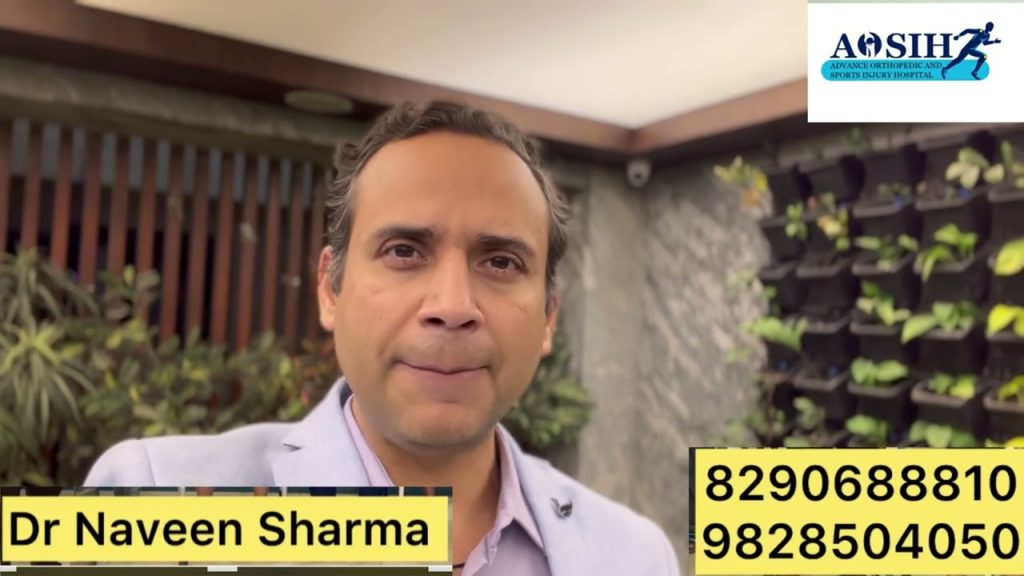
Dr. Naveen Sharma takes time to understand how the injury happened, explains your MRI in simple language and tells you honestly whether surgery is needed. When an ACL injury also damages the meniscus or PCL, both are treated in a single, well-planned surgery.
-
 Strong experience in ACL care 3,000+ primary, revision and multi-ligament knee surgeries focused on restoring stability.
-
 Focused sports injury approach Rehab goals built around your sport, with a safe and gradual return to play.
-
 Careful surgical method Advanced arthroscopic instruments for anatomic graft placement that protects nearby tissues.
-
 Support beyond surgery Structured ACL rehab programme and remote follow-ups to rebuild strength and prevent re-injury.
ACL Treatment for Patients Across Chennai & Tamil Nadu
Whether you’re a college footballer, an IT professional who twisted a knee in weekend cricket on OMR, or a kabaddi player from a district team, getting expert ACL advice shouldn’t be hard. Here’s how the process works for patients from Chennai:
-
Share your MRI
Send your MRI and reports on WhatsApp or through the form for a doctor's review.
-
Video consultation
Discuss the diagnosis, graft choice, recovery timeline and cost directly with the surgeon.
-
Surgery & home rehab
A planned surgery date, a short 1–2 day hospital stay, and rehab you continue at home with online check-ins.
Patients reach out from all over Chennai and Tamil Nadu, including:
Real ACL Recovery Stories & Expert Videos
 Google Rating 4.9
"He reconstructed my ACL and repaired my damaged meniscus in one surgery. It was completed in about an hour without much pain or discomfort."
Adarsh Kumar
"I had ACL surgery elsewhere but got little help with exercises. After joining Dr. Naveen's ACL help programme, I am recovering steadily."
Nityananda Patra
"I had ACL surgery elsewhere but got little help with exercises. After joining Dr. Naveen's ACL help programme, I am recovering steadily."
Shagufta Parveen
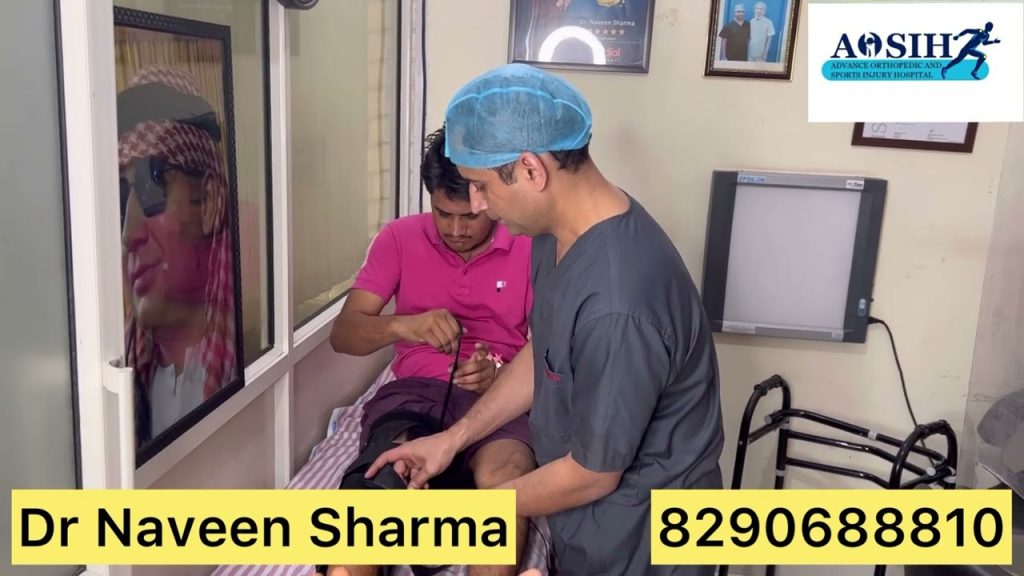


ACL Surgery in Chennai – Frequently Asked Questions
Cost & Choosing a Surgeon
What is the cost of ACL surgery in Chennai?
ACL surgery cost is different for every patient because it depends on what the MRI and the surgery reveal. The main factors are:
- Graft type – hamstring, peroneus longus, patellar or donor graft.
- Implants – fixation buttons and screws used to hold the graft.
- Extra procedures – meniscus repair, cartilage treatment or PCL reconstruction.
- Hospital stay – room category and number of days.
Share your MRI on WhatsApp to get a clear, all-inclusive estimate before you decide. Most health insurance policies cover ACL reconstruction.
Who is the best ACL surgeon for patients in Chennai?
The best ACL surgeon for you is one with proven experience and a clear recovery plan. Look for:
- Specialisation – fellowship training in knee arthroscopy and sports surgery.
- Volume – a large number of ACL reconstructions performed every year.
- Technique – anatomic, arthroscopic graft placement.
- Rehab support – a structured physiotherapy programme after surgery.
- Patient feedback – verified reviews and recovery stories.
Dr. Naveen Sharma is fellowship-trained in Germany and South Korea, has performed 3,000+ ACL reconstructions and holds a 4.9★ Google rating from 3,335 reviews.
Is ACL surgery covered by health insurance?
Yes. ACL reconstruction is a medically necessary surgery and is covered by most health insurance policies, subject to policy terms and waiting periods. Keep these ready:
- Health insurance card and policy details
- MRI report and doctor’s consultation notes
- Photo ID proof
The team helps with cashless approval and reimbursement paperwork.
Can I consult online from Chennai before travelling?
Yes. The process is designed for patients from other cities:
- Step 1: Share your MRI and reports on WhatsApp.
- Step 2: Book a video consultation to discuss diagnosis, graft choice and cost.
- Step 3: Plan your surgery date with a short 1–2 day stay.
- Step 4: Continue rehab at home with online follow-ups.
Diagnosis & Treatment
How do I know if my ACL is torn?
Common signs of an ACL tear include:
- A “pop” felt or heard at the time of injury
- Rapid swelling within a few hours
- The knee giving way while turning or walking
- Difficulty fully bending or straightening the knee
Diagnosis is confirmed by clinical tests (Lachman, anterior drawer, pivot shift) and an MRI scan of the knee.
What are the grades of an ACL tear?
- Grade 1 (sprain): The ligament is stretched but intact; the knee is stable.
- Grade 2 (partial tear): Part of the ligament is torn; the knee may feel loose.
- Grade 3 (complete tear): The ligament is fully torn; the knee is unstable and usually needs reconstruction.
Can an ACL tear heal without surgery?
A complete ACL tear does not heal on its own because the ligament has poor blood supply. However, surgery is not always needed. Non-surgical ACL tear treatment may work for:
- Partial (Grade 1–2) tears with a stable knee
- Less active people who don’t play pivoting sports
- Patients willing to modify activities
This involves physiotherapy, quadriceps and hamstring strengthening, and a knee brace for 6–12 weeks.
Can ACL and meniscus tears be treated in one surgery?
Yes. Up to half of ACL injuries also involve a meniscus tear. Both are treated in the same arthroscopic surgery:
- The meniscus is repaired (stitched) whenever possible to protect the knee long term.
- The ACL is reconstructed in the same sitting.
- Recovery may be slightly slower if a meniscus repair is done.
What happens if I delay ACL surgery?
Living with an unstable knee can cause further damage over time:
- Repeated “giving way” episodes
- Meniscus tears that may become unrepairable
- Cartilage damage and early knee arthritis
- Loss of muscle strength and confidence
Surgery is usually planned once swelling settles and full knee movement returns, typically within 3–6 weeks of injury.
What is the right age for ACL surgery?
There is no strict age limit. The decision is based on activity level and knee stability:
- Teenagers: Growth-plate-sparing techniques are used when bones are still growing.
- 18–40 years: Most common age group, especially sports-active people.
- 40+ years: Surgery is suitable for active people with an unstable knee and healthy cartilage.
About the Surgery
How long does ACL surgery take and how long is the hospital stay?
- Surgery time: 60–90 minutes (longer if meniscus repair is also done).
- Anaesthesia: Spinal or general, with a nerve block for pain relief.
- Hospital stay: Usually 1–2 days.
Is ACL surgery painful?
You won’t feel pain during surgery. Afterwards, pain is well controlled:
- A nerve block numbs the knee for the first 12–24 hours.
- Pain is moderate for 3–5 days and managed with tablets and ice.
- Keyhole surgery means smaller cuts and less pain than open surgery.
Which graft is best for ACL reconstruction?
There is no single best graft – it depends on your sport, body type and knee condition:
- Hamstring: Most common; small cut and less kneeling pain.
- Peroneus longus: Keeps knee muscles untouched; good for athletes.
- Patellar tendon (BTB): Very strong; preferred for high-demand sports.
- Quadriceps tendon: Large graft, often used in revision surgery.
What is the success rate of ACL surgery?
Around 90% of patients regain a stable knee and return to daily activities after ACL reconstruction. Success depends on:
- Accurate graft placement by an experienced surgeon
- Following the physiotherapy plan consistently
- Not returning to sport too early
What are the risks of ACL surgery?
ACL reconstruction is a safe, routine procedure. Possible but uncommon risks include:
- Knee stiffness (prevented with early physiotherapy)
- Infection (rare with sterile arthroscopic technique)
- Blood clots (prevented with early walking and ankle exercises)
- Graft re-tear, usually from returning to sport too early
Recovery & Return to Sport
What is the ACL surgery recovery time?
- Day 1: Walk with support and a brace.
- 2–3 weeks: Walk without support; desk work.
- 6–8 weeks: Stairs, cycling and normal daily activities.
- 3–4 months: Straight-line jogging.
- 6–9 months: Full return to sport after strength and balance tests.
When can I walk, drive and go back to work?
- Walking: With support from day 1; independently in 2–3 weeks.
- Desk job / IT work: 2–3 weeks.
- Driving: 4–6 weeks for the left knee (automatic car); 6–8 weeks for the right knee.
- Two-wheeler riding: Around 6–8 weeks.
- Physical / field work: 3–4 months.
When can I return to football, cricket or kabaddi after ACL surgery?
Most people return to pivoting sports in 6–9 months. Before returning, you should:
- Have no swelling and full knee movement
- Reach at least 90% leg strength compared with the other side
- Pass hop, balance and agility tests
- Complete sport-specific drills without pain
Returning too early increases the risk of a re-tear.
Can the ACL tear again after surgery?
A re-tear is uncommon but possible, especially in young athletes returning to cutting sports. You can lower the risk by:
- Completing the full rehab programme
- Doing injury-prevention exercises (landing, balance and core training)
- Returning to sport only after passing return-to-sport tests
Learn More About ACL & Knee Care
Explore detailed guides on ACL injuries and find ACL surgery information for your city or state.
ACL Surgery in Other Cities
Medically reviewed by Dr. Naveen Sharma, MS (Ortho). Last updated: October 2026. This page is for information only and does not replace a medical consultation. Results vary from patient to patient.